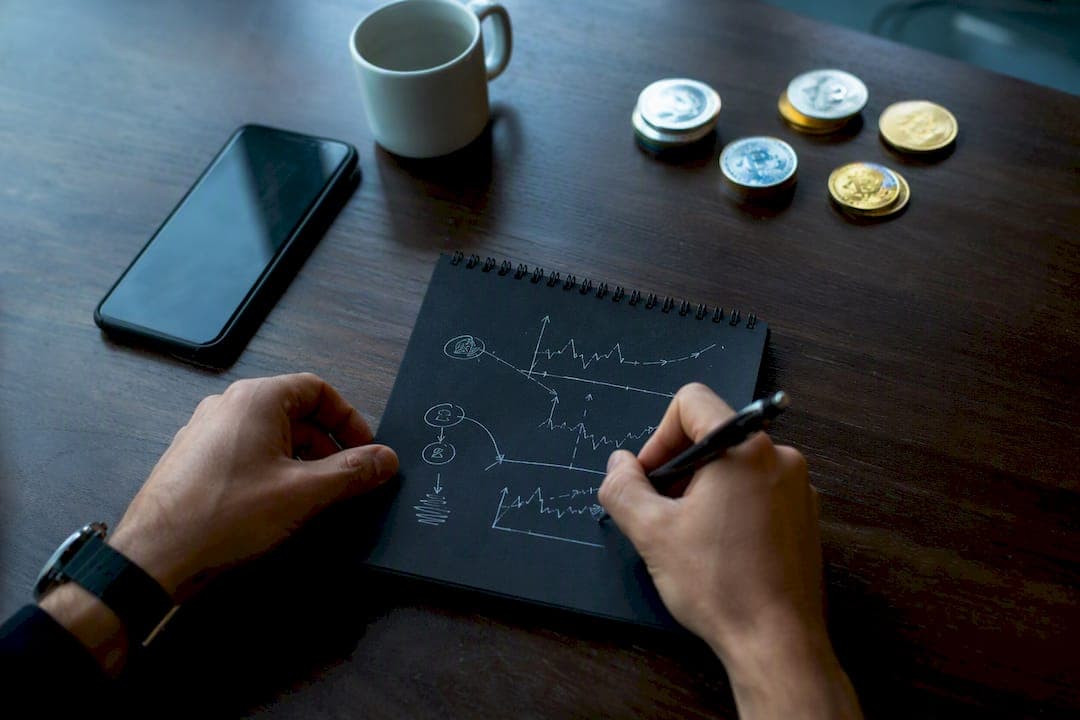
Hindsight bias in trading is the tendency to rewrite your own memory once you know how a trade turned out, convincing yourself you "saw it coming" when you didn't. The immediate risk: it inflates your confidence in your own forecasting skill and quietly wrecks your ability to learn from mistakes.
Two consequences follow fast. First, you start oversizing positions and overtrading because your track record feels better than it was. Second, your learning gets distorted, you keep repeating the same setup errors because you never accurately diagnosed what went wrong.
This article gives you concrete ways to fight back:
- A journal structure that captures your actual reasoning before the outcome exists
- A three-step pre-mortem you can run before any trade
- Probabilistic forecasting habits that replace false certainty
- A process-scoring checklist for honest post-trade review
Key Takeaways
Hindsight bias distorts memory after a trade closes, and the only durable fix is recording your reasoning, probability estimate, and risk plan before you know the outcome.
| Point | Details |
|---|---|
| Bias inflates confidence | Winning trades get rewritten as skill, pushing you toward oversized future positions. |
| Losses trigger false regret | "I should have known" narratives drive revenge trading and compound losses. |
| Memory distortion is measurable | Prior-belief recall shifted by roughly 19 percentage points in a study of 705 entrepreneurs. |
| Pre-mortems surface more risk | Prospective failure analysis generates about 30% more failure explanations than standard review. |
| Score process, not outcome | Rate each trade 0 to 10 on rule adherence and probability accuracy, independent of profit or loss. |
Table of Contents
- What Hindsight Bias Looks Like in Trading
- How Hindsight Bias Damages Your Trading Performance
- Why Does Hindsight Bias Happen in the Brain?
- Pre-Trade Habits That Block Hindsight Bias Before It Starts
- Reviewing Trades by Process, Not Outcome
- Real-Time Tools to Interrupt Hindsight in the Moment
- How Decision Intelligence Operationalizes Honest Learning
- The Real Lesson Behind Hindsight Bias
- Sources
What Hindsight Bias Looks Like in Trading
Hindsight bias shows up the moment you look back at a closed trade and edit your own memory to match the result. It's not lying to yourself on purpose. Your brain automatically smooths the story so the outcome feels like it was obvious all along.
Two patterns show up constantly among self-directed traders:
- The winning trade that builds false confidence. You buy a breakout, it works, and within a week you've convinced yourself you "read the volume perfectly." In reality, you had a coin-flip setup with a favorable risk-to-reward ratio, and luck did some of the work. The distortion pushes you into your next trade oversized, because your memory now credits skill instead of variance.
- The losing trade that gets rewritten as obvious. A stock gaps against you overnight and you tell yourself "I should have known, the signs were everywhere." That regret spiral drives revenge trading, where you try to immediately recover the loss on a lower-quality setup.
The scale of this distortion isn't trivial. A Kellogg School study tracking 705 entrepreneurs found that 77.3% had predicted their venture would succeed before the outcome was known, but afterward only 58% recalled having believed that, a roughly 19 percentage-point shift in reported prior belief driven purely by knowing the result. Traders do the same thing to their own pre-trade thinking every single day, just faster.
How Hindsight Bias Damages Your Trading Performance
The damage isn't abstract. It shows up in your account balance and in the quality of decisions you make six months from now.
Four specific harms compound on each other:
- Overconfidence in pattern recognition. You start believing you can spot setups that were, on closer inspection, only obvious after the fact.
- Underestimated risk on the next trade. If your last win "should have been easy to call," your next entry gets a wider stop or a bigger size than your plan allows.
- Chasing recent winners. You gravitate toward whatever strategy just paid off, even when the underlying edge hasn't changed.
- Misattributed learning. You draw the wrong lesson from a trade because you're reviewing a story you've already edited, not what actually happened.
Investopedia's overview of the bias directly connects this pattern to excessive trading and inflated confidence, noting that traders who feel their past calls were more accurate than they were tend to trade more frequently and take on more risk, both of which raise transaction costs and erode returns over time.
Consider a rapid, AI-driven market move, the kind that has become more common as algorithmic flows compress reaction time into minutes rather than hours. A trader who avoided the initial spike, then bought the retracement and caught a bounce, will often reconstruct the memory as a calculated read on liquidity and order flow. The next similar setup gets bigger size, because the trader now believes this is a repeatable skill rather than one favorable outcome among several possible ones. When the pattern fails to repeat, and it usually doesn't, the loss is disproportionate to the original edge.
Behavioral commentary on this dynamic describes it bluntly: the retroactive sense of certainty turns market history into a self-deceptive narrative that hides how genuinely uncertain the moment actually was.
Why Does Hindsight Bias Happen in the Brain?
Three overlapping mechanisms drive this, and none of them respond well to simply "trying harder" to be objective.
- Memory distortion. Your brain doesn't store a perfect recording of your pre-trade reasoning. It stores a compressed summary, and that summary gets overwritten every time you recall it, especially once a clear outcome is available to anchor the story.
- Inevitability illusion. Once you know a stock crashed, every prior data point gets reinterpreted as a warning sign you "must have noticed," even ones that were noise at the time.
- Foreseeability creep. The gap between what you actually predicted and what you now believe you predicted widens the more time passes and the more often you retell the story.
Neuroscience research on emotional regulation offers a useful clue for why this is so hard to override through willpower alone. Findings on the amygdala's role in motivational bias suggest that simply naming an emotional or cognitive state, saying "I'm feeling overconfident right now," reduces reactive activity in the amygdala and helps restore control to the prefrontal cortex, the region responsible for weighing evidence rather than reacting to it.
The problem compounds in 2026 markets specifically. AI-driven trading tools and instant retrospective data give you an almost unlimited supply of charts, indicators, and after-the-fact "signals" to cherry-pick from, amplifying hindsight bias rather than reducing it, because there is simply more retrospective evidence available to construct a flattering story.
Pre-Trade Habits That Block Hindsight Bias Before It Starts
The fix isn't more discipline in the moment. It's removing the opportunity for your memory to rewrite itself later, by capturing your actual reasoning while it's still uncertain.
- Keep a structured trading journal before you enter. Record the probability you'd assign to the trade working (not "confident," an actual number like 60%), your rationale in one sentence, your stop level, and one alternative scenario you considered and rejected. Four fields, filled in before the trade, not after.
- Run a three-step pre-mortem. Before entering, ask: if this trade fails, what's the most likely reason? Write down two or three specific failure paths. Then ask what evidence would confirm each one is unfolding. This forces you to hold failure scenarios in mind while they're still hypothetical, since research by Mitchell, Russo, and Pennington found that this kind of prospective analysis generates roughly 30% more failure explanations than standard forward-looking review.
- Frame every forecast as a probability band, not a certainty. Instead of "this breaks out," write "60% chance of continuation, 40% chance of a fake-out back below support." Bands are much harder to retroactively rewrite as "obvious" than binary predictions.
Pair this with fixed risk rules that don't bend to how confident you feel after a winning streak: a hard cap on position size (say, 2% of account risk per trade), a stop-loss rule that's set before entry and never moved further away, and a maximum leverage ceiling you don't override regardless of conviction.
Pro Tip: Write your pre-trade probability estimate on a sticky note or in your journal app before you click buy. When you review the trade later, you're comparing your outcome against your own written number, not your memory of what you "expected."

For a ready-made structure, a trading journal template with these fields built in removes the friction of designing your own from scratch.
Reviewing Trades by Process, Not Outcome
The single biggest upgrade you can make to your post-trade routine is auditing the decision, not the result. A losing trade made with sound process is a good decision that had a bad outcome. A winning trade made on a whim is a bad decision that got lucky. Confusing the two is exactly how hindsight bias entrenches itself.
Build your review around four checklist items every time:
- Did you follow your stated entry and exit rules, or deviate mid-trade?
- Was your probability estimate written down before entry, and how far off was it?
- Was your risk-to-reward ratio at entry actually favorable, or rationalized afterward?
- Did you document at least one alternative scenario you considered and rejected?
Score each trade from 0 to 10 on process adherence alone, ignoring profit and loss entirely, then run this review weekly for active trading and monthly for a fuller pattern check.
| Review Element | What It Catches |
|---|---|
| Process adherence score (0-10) | Whether you followed your own plan or improvised under pressure |
| Written probability vs. actual outcome | Whether your forecasting is calibrated or just lucky |
| Risk-to-reward at entry | Whether the trade made sense before you knew the result |
| Alternative scenarios logged | Whether you genuinely considered being wrong |
A trading journal that's actually reviewed on a schedule, rather than filled in and forgotten, is what separates traders who improve from traders who just accumulate history. Bringing in a second set of eyes, a trading partner or mentor, on a handful of trades each month also helps catch narrative drift you can't see in your own writing, since you're often the last person to notice when your own story has quietly changed.
Real-Time Tools to Interrupt Hindsight in the Moment
Some of the most effective tools work while you're still in the trade, not after.
- Affect labeling. Say or write the specific emotion out loud: "I'm feeling regret about missing that entry." This single step, backed by the amygdala research cited earlier, measurably reduces the reactive pull that leads to revenge trades.
- Implementation intentions. Pre-commit to specific if-then rules: "If price closes below my stop, I exit, no exceptions" or "If I've made three trades today, I stop regardless of how I feel." These remove the decision from a moment when your judgment is least reliable.
- Cyclic sighing or a mandatory cool-off. A short physiological reset, several slow exhales, or a strict five-minute pause before re-entering after a loss, breaks the loop where a bad outcome immediately triggers an emotionally driven next trade.
Pro Tip: Set a hard rule that you cannot re-enter a market within five minutes of closing a losing trade. That single pause blocks most revenge-trading decisions before they happen.
How Decision Intelligence Operationalizes Honest Learning
Manual journaling works, but it depends on you being honest with yourself after the fact, which is precisely where hindsight bias attacks. A decision-scoring approach adds an outside check that doesn't rewrite itself with the outcome.
Eialgos evaluates each setup through a six-factor analytical engine before you know the result, scoring the psychological and structural quality of the decision itself rather than predicting the outcome. That score exists independent of whether the trade wins or loses, so it can't be quietly revised later the way memory can.
- The scoring engine flags behavioral drift, like oversized entries following a win streak, as it happens rather than in a retrospective story.
- LIANA, the platform's assistant, surfaces personalized feedback when your stated rationale starts diverging from your historical patterns.
- Combining a manual journal entry with an automated process score gives you two independent records to compare, which makes it far harder for hindsight bias to quietly edit the narrative.
Reading more on the underlying six-factor decision scoring framework shows how process measurement works when it's built into the platform rather than reconstructed from memory.
The Real Lesson Behind Hindsight Bias
The conventional advice here is "keep a journal and be honest with yourself." That advice isn't wrong, but it dramatically understates the problem. Hindsight bias doesn't fail because traders lack discipline. It fails because human memory is not designed to preserve an accurate record of uncertainty once a clear outcome exists to anchor it.
What the research actually supports is narrower and more useful: capture your reasoning before the outcome, using a written probability and a documented failure scenario, and you remove your memory's ability to rewrite it later. That's a structural fix, not a motivational one. Pre-mortems work because they force you to sit with uncertainty on purpose, at the exact moment your brain would rather commit to a story.
Where most traders go wrong is reviewing win-loss records instead of decision records. A string of profitable trades made on inconsistent logic is not a good process, it's a lucky one waiting to reverse. If you take one thing from this, prioritize building a record that exists independent of outcome, whether that's a disciplined journal, a pre-mortem habit, or a scoring system that grades the decision on its own terms.
— Anantha
Sources
- An investigation of hindsight bias in nascent venture activity — Kellogg
- Hindsight bias in trading — Behavioral Edge (2026)
- How to control your emotions while trading — The Wall Street Coach
- Hindsight bias — Investopedia